I The interval
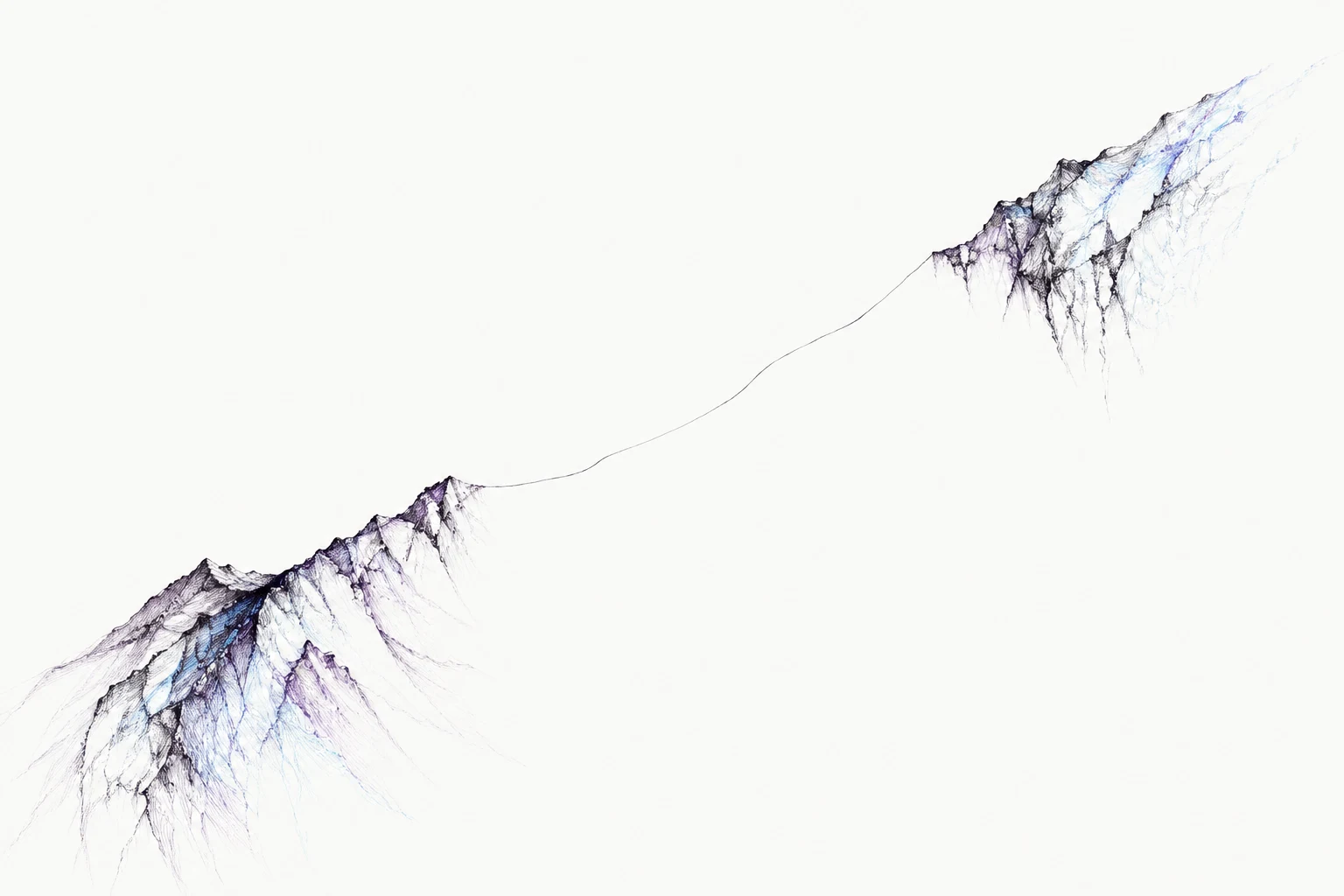
A line goes out
where the ground gives way.
For a moment,
the distance has a body.
What are you crossing toward?
Zarathustra pictures humanity as a rope above an abyss. Smoot examines people who climb without one. Here, the two images meet in exposure: a philosophical crossing beside an actual, irreversible risk. Nietzsche, Prologue §4 · Smoot, introduction.
II The hand
Before the sentence,
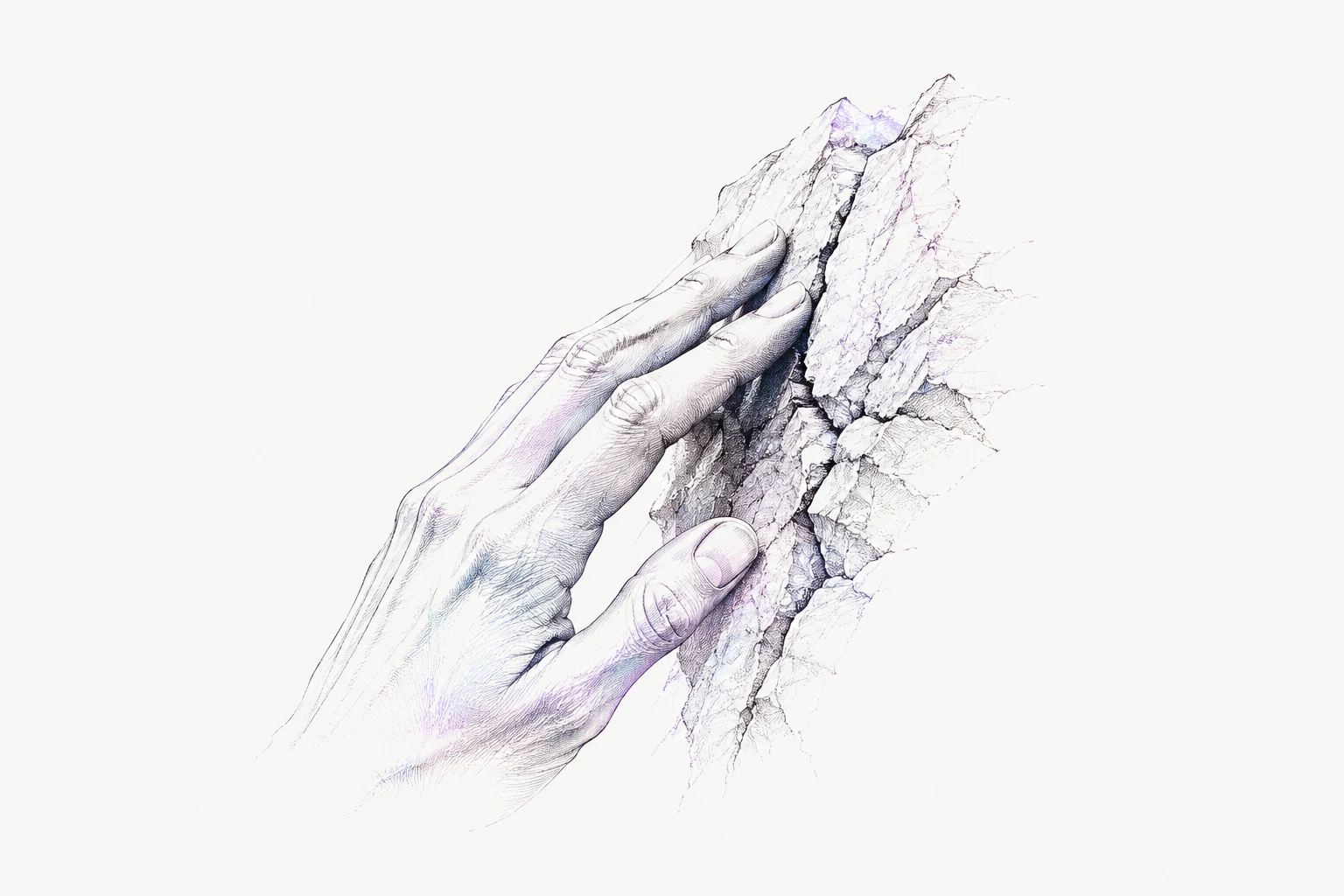
pressure.
The palm reads
what the eye called empty.
Where does thinking begin?
Nietzsche locates a knowing self in the body. Smoot records soloists’ accounts of complete attention, while questioning the grand explanations attached to them. Read together, they let us ask what a hand knows before we turn the experience into a story. The Despisers of the Body · Smoot, introduction.
III The borrowed voice
You could solo it became You will.
You went alone.
The voice came with you.
Higher, it said.
Again.
Whose freedom is this?
In Smoot’s account, another climber’s suggestion becomes an obsession. Zarathustra’s question about the purpose of freedom unsettles that borrowed command. Solitude can still contain an audience. Smoot’s personal account, p. 8 · The Way of the Creating One.
IV The open hand
Free
for what?
The camel carries.
The lion refuses.
The child finds a stone
and forgets to call it a summit.
What could you make without proving anything?
The three metamorphoses lead from bearing a demand, through refusing it, to creating. Against Smoot’s questions about compulsion, they suggest a different measure of freedom: the possibility of changing what we want. The child and stone above are our image of that possibility. Return to the three transformations · Smoot, introduction.
V The return
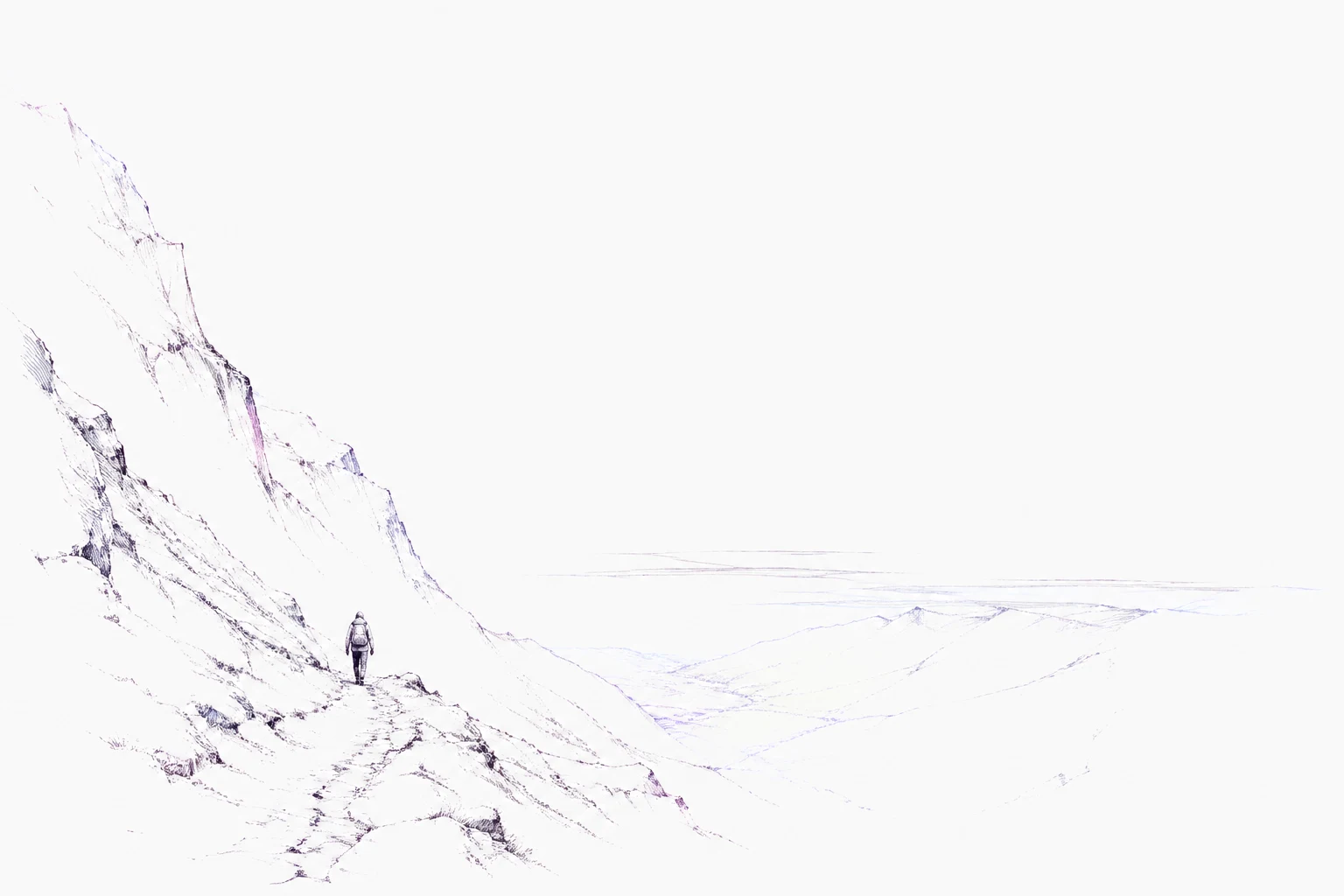
The ridge thins into weather.
Below,
someone has left a light on.
Bring back
the part of you
that can sit beside them.
What comes home with you?
After the tightrope walker falls, Zarathustra stays with him and carries his body away. Smoot’s introduction keeps other people’s suffering within its questions about chosen risk. Our imagined descent holds that unfinished relation: the solitary act, and the lives it reaches. Prologue §§6–8 · Smoot, introduction.